Robotics industry
Wire solutions engineered for Robotics
Recognizing the critical role of thermal management in advanced robotic systems, our engineering team is deeply involved in the design and development of innovative heat transfer and precise heat measurement solutions. From dissipating excess heat in high-performance actuators to providing accurate temperature feedback for sensitive operations, our custom wire expertise is instrumental in enabling the reliability and efficiency of the first and second waves of robotic innovation, ensuring optimal performance for these cutting-edge technologies.
- Fine gauge
- High temperature
- Custom cable
- Prototype → production
What are you trying to solve?
Engineering-first support
Bring us the application, not just a part number
Tell us the conditions your Robotics application runs in: temperature, resistance, gauge, weight, flex life, shielding, insulation and manufacturability. Our engineers help you build the right wire around them.
- Need a smaller OD or lower weight?
- Need precise resistance per foot?
- Need better flex performance?
- Need higher-temperature insulation?
- Need sensing and power in one cable?
- Need prototype quantities first?
Short form
Tell us what you’re designing
A few details are enough to start. Attach a drawing or spec if you have one.
Thanks, we have it.
An engineer or sales specialist will review your application and follow up.
An engineer or sales specialist will review your application and follow up.
Robotics · Capabilities
Build the right wire around the environment
Start with the capability closest to your application.
-
Resistance & heating wire
Custom resistance values, heating applications and constructions for demanding thermal environments.
-
Thermocouple & sensing
Temperature-measurement wire and cable designed around accuracy, gauge and insulation requirements.
-
Fine-gauge custom cable
Compact constructions engineered to reduce weight, save routing space and combine functions.
-
Prototype to production
Engineering collaboration, material selection and iterative development before scalable manufacturing.
-
ISO 9001:2015
Certified quality system
-
ISO/IEC 17025
Accredited testing and calibration
-
Fine-gauge expertise
Specialized capability for small constructions
-
Rapid prototyping
Short runs to prove a design
Robotics · Resources
Featured Robotics resources
-
Robotics
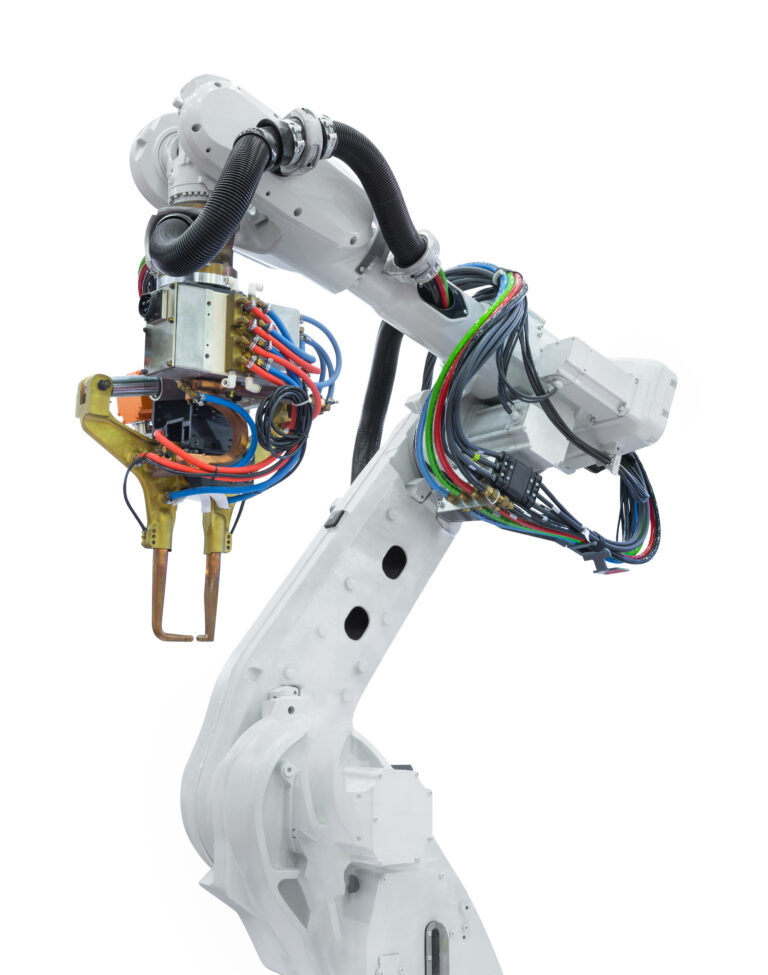
‘High-Flex Life’ Wire for Robotic Motion Control: Engineering for Millions of Cycles
Robotic systems are celebrated for their precision, repeatability, and endurance. The servo motors, encoders, and controllers that drive them are spec’d carefully,…
-
Aerospace
Stranded vs. Solid Resistance Wire: A Performance Comparison
In the intricate world of electrical and thermal design, the choice of conductor is a foundational decision that can have cascading effects…
-
Aerospace
Design Considerations When Choosing Heating Wires for Industrial Use
In modern industry, heating wires are the hidden heroes behind countless manufacturing processes, from plastic molding and packaging to aerospace and semiconductor…
All 18 articles
- Special-Limits Type K in Fine Gauges: A Repeatable, Scalable Build
- High Temperature Wire: Choosing,Using, and Maintaining It Safely
- Thermocouple Wire Type K: Applications, Accuracy & Industry Uses
- Precision Resistance Heating Wire for Composite Tooling in CUAV/UAV Applications
- High-Resistance Wire for Aircraft: Heated Leading Edge Repair Patches
- Pelican Wire at Commercial UAV Expo – Booth 638
- High-Precision Resistance Wire for Aerospace Robotics & Motion Control Systems
- Engineering Precision in the Coldest Frontiers
- Navigating the Uncharted Depths: Pelican Wire Powers Autonomous Maritime Systems
- Pelican Wire is Bringing Custom Engineered Wire Solutions to XPONENTIAL 2025
- The Essential Guide to Uninsulated Wire: Uses, Benefits & Why Pelican Wire is the Best Choice
- Pelican Wire Makes a Strong Case for Reshoring American Manufacturing
- The Crucial Role of Reliable Electrical Components in Modern Industries
- Maximize Efficiency with Pelican Wire’s High-Quality K-Type Thermocouple Wire
- Pelican Wire Manufacturing Capabilities
Robotics · FAQ
Answers to common questions
What engineers ask us most about wire for Robotics applications.
What are the challenges of wiring for robotic applications?
Robotic applications demand wires that can withstand constant flexing, twisting, and movement without failing. Durability, flexibility, and a small form factor are crucial. Pelican Wire designs and manufactures custom cables that are specifically engineered for the dynamic and demanding environment of robotics.
What types of wire does Pelican Wire offer for the robotics industry?
We offer a wide range of solutions, including fine-gauge multi-conductor cables, high-flex life cables, and custom-molded assemblies. Our expertise in thermal management also allows us to provide solutions for heat dissipation and temperature measurement in high-performance robotic systems.
How can Pelican Wire help with a custom robotics project?
Our engineering team partners with robotics companies to develop custom wire and cable solutions that meet the precise needs of their applications. We can assist with everything from material selection and cable design to prototyping and full-scale production.
What is high-flex life cable and why is it important for robotics?
High-flex life cable is designed to withstand millions of flex cycles without breaking. This is critical in robotics, where cables are constantly moving and bending. We use specialized materials and construction techniques to maximize the flex life of our cables.
Show 6 more questions Show fewer questions
What is the difference between a robot cable and a standard industrial cable?
Robot cables are designed for a much higher degree of flexibility and durability than standard industrial cables. They are also often smaller and lighter to reduce the overall weight and inertia of the robotic arm.
Can you provide custom-molded cable assemblies for our robot?
Yes, we can provide custom-molded cable assemblies that are designed to fit your specific robot and application. This can improve the reliability and aesthetics of your robot, as well as simplify the assembly process.
What are some of the common causes of cable failure in robotic applications?
The most common cause of cable failure in robotics is fatigue from repeated flexing. Other causes include abrasion, chemical exposure, and improper installation. We can help you select the right cable for your application to minimize the risk of failure.
How do you test your robot cables for flex life?
We have specialized equipment that can simulate the flexing and twisting motions of a robotic arm. This allows us to test our cables to millions of cycles and verify their flex life performance.
Can you help us with cable management for our robot?
While we don’t provide cable management systems ourselves, we can design our cables to be compatible with a wide range of cable management solutions. We can also provide guidance on best practices for cable routing to maximize flex life.
What is the future of robotics and how is Pelican Wire preparing for it?
The future of robotics is in collaborative robots (cobots), mobile robots, and AI-powered automation. We are constantly developing new wire and cable solutions to meet the evolving needs of this exciting industry, including smaller, lighter, and more flexible cables.
Next step
Have a wire challenge? Put it in front of our team.
Tell us the application, the environment and the performance you need. We’ll help you choose the right next step: a conversation, a spec review or a quote.
Have a question? Let’s talk.
Talk with a wire expert
Thanks, we have it.
An engineer or sales specialist will review your application and follow up.